Notes from a Divorced Dad — A Book for When Life Shifts and Gets Loud

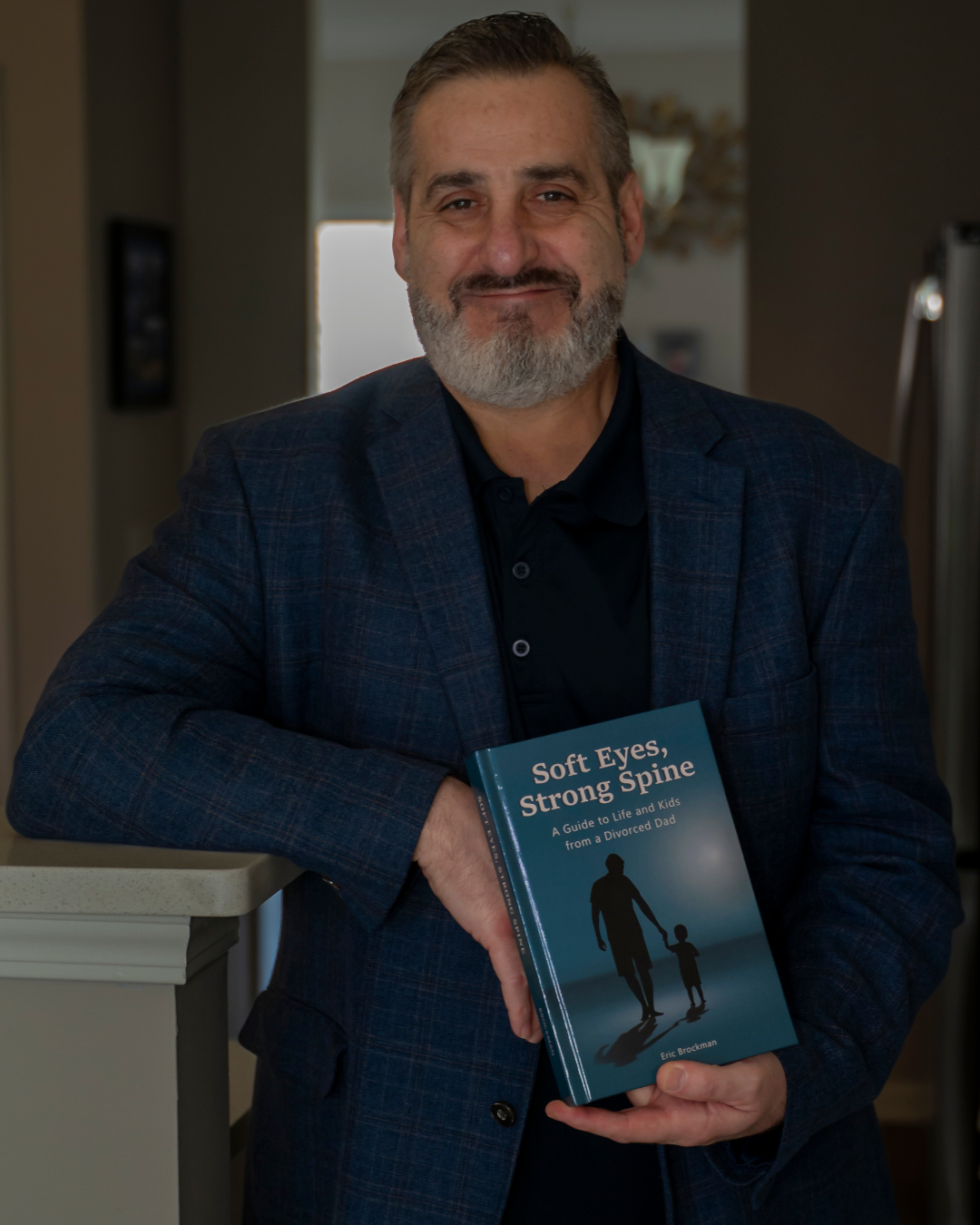
For months, I have been giving you pieces of the book without really asking you to read the book.
Fatherhood. Divorce. Work. Desire. Success. Kids growing up. The things men carry, and the things we refuse to put down.
Each week I take one of those things, hold it still for a little while, and try to see what is actually there.
Some of you have been reading almost from the beginning. And somewhere along the way, I realized I have probably done a better job telling you about the Notes than telling you about the book behind them.
I get asked often what Soft Eyes, Strong Spine actually is.
The simplest answer I have found is this:
It is an emotional operating system you can use across work, parenting, relationships, and the decisions you make every day.
Soft eyes for clarity. Strong spine for strength.
And steadiness underneath both.
—
The subtitle of the book is A Guide to Life and Kids from a Divorced Dad.
But it is not really a book about divorce. Divorce is where I learned a lot of it. It was the season that forced me to pay attention.
The kids were getting older. Empty nesting was starting to come into view. Relationships were changing. Work still expected me to show up. Life did not stop because mine had become complicated.
And I began noticing how often I was arriving at important moments at the wrong emotional frequency—too tight, too reactive, too ready to fix, too interested in controlling an outcome that probably could not be controlled.
What I needed was not another strategy. I needed steadiness.
That became the center of the book.
Soft Eyes is the part of us that stays open enough to see what is actually happening: a child who needs to be heard instead of corrected, a room that is tense enough already, a relationship changing shape, a moment that does not need our force.
Strong Spine is the part that stays grounded while all of that is happening: boundaries, clarity, strength, and the ability to remain steady when things get uncomfortable without collapsing, performing, disappearing, or hardening.
Warmth without weakness. Strength without force. That is the framework.
—
The book is part memoir because stories are how I learned most of this.
There are real scenes of kids, marriage, divorce, work, and the Dadisms that somehow carry more truth than we realize when we first hear them.
A lot of those scenes include moments where I got something wrong before I understood what the moment had been trying to teach me.
But the stories are there in service of something larger. How do you regulate yourself without shutting down? How do you hold a boundary without turning it into a fight?
How do you stay close to your kids without asking them to carry the emotional weight of your adult life? How do you remain steady when the familiar parts of your identity start moving around?
Those are divorce questions, but they are also parenting questions, work questions, relationship questions, midlife questions. Human questions.
One reader said it to me more directly:
“Eric, this is more than a divorce book.”
She was right. Divorce may be the doorway. Steadiness is the subject.
—
Throughout the book are sections I call Field Notes.
They appear when something needs to be named and held still for a moment—a thought, a pattern, a sentence worth carrying around for a while.
And at the end of every chapter is another section:
Notes from a Divorced Dad — What to Carry Forward.
Those are probably the closest relatives to the Notes you receive here.
The story happens, and then we ask what remains after the story is over. What is worth carrying? What needs to be put down? What might help the next time life gets loud?
Because it will. The goal is not to somehow make life stop getting loud.
The goal is to become steadier inside it.
—
That may be the simplest way to explain the relationship between this newsletter and the book.
The Notes are individual windows. The book is the house.
Here I can spend a week thinking about rockets and success, or sex and the need to feel wanted, or what our kids absorb from us when we are not consciously teaching them anything.
The book gives those ideas a larger place to live. They begin connecting, and you start to see the same questions appearing in different forms:
Can I stay steady enough to see clearly?
Can I stay strong enough to remain true?
Can I respond instead of react?
Can I stay connected without losing myself?
At work. With a child. During divorce. Inside a relationship. Alone in a quiet house. When something ends. When something new begins. When the old map stops matching the terrain.
Stay calm. Stay clear. Stay true.
Soft Eyes, Strong Spine. Everything begins there.
—
So let me stop circling it and ask plainly.
If you read these Notes and you have not bought the book, I would like you to buy it.
If this writing has been useful to you, the book goes deeper. It connects the pieces and gives the idea of steadiness somewhere larger to live. Not as something to admire when life is calm, but something to practice when life gets loud.
You do not need to be divorced. You do not need to be a father. You may simply be in a season that is asking more of you than it did before.
That is who I wrote it for.
Keep your eyes soft and your spine strong.
— Eric Brockman